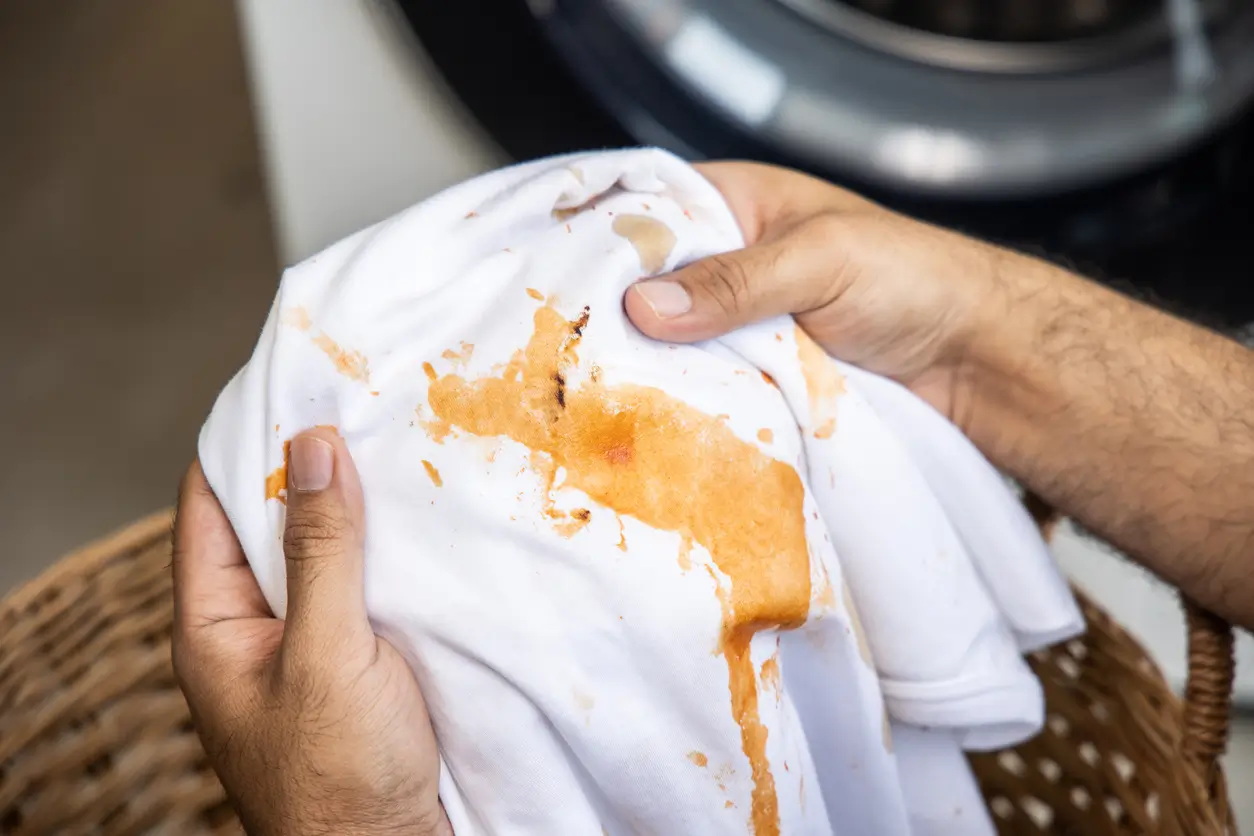
Time alone doesn't make most stains permanent. Heat does. A red wine stain sitting in a closet for three weeks is harder to treat than a fresh spot, but it's still treatable. The same stain after one dryer cycle is a different problem. The dryer locks pigment and protein into fiber at a molecular level that professional cleaning can reduce but may not fully reverse.
If a stained garment has never seen heat, the odds of professional removal are significantly better than the stain's age suggests. This guide covers which stains are still salvageable and what determines the outcome.
Why a Fresh Stain and an Old Stain Are Two Different Problems
A stain from an hour ago and a stain from three weeks ago are not the same chemistry problem, even if they came from the same spilled glass of wine.
When a stain is fresh, the substance sits on top of the fibers or has just started soaking in. The molecules haven’t bonded to the fabric yet. Dry cleaning at this stage is mostly a matter of dissolving and lifting something that hasn’t settled in.
An old stain has had time to do three things that make it harder to remove:
- Bond to the fiber at a molecular level, instead of just resting on the surface
- Oxidize, the same chemical process that turns a cut apple brown, which changes the stain’s structure and often its color
- Set with heat, if it went through a dryer or got ironed before anyone noticed it was there
This is why a cleaner can look at two identical-looking stains and tell you one will come out completely and the other might only fade. It’s not guesswork; it’s the fiber telling a story about how long that stain has been there and what’s happened to it since.
How Dry Cleaners Assess a Stain Before Treating It
Most people assume a cleaner just runs every garment through the same process. They don’t. A trained cleaner looks at three things first:
- Color and texture: a crusty, dark ring reads differently than a faint shadow
- Fabric type: silk, wool, and synthetic blends react differently to the same stain
- Location and likely cause: a stain on a cuff suggests something different from one on a lapel
That quick assessment determines which solvent, pretreatment, and pressure level get used. Skipping it is how stains get permanently set instead of removed.
How Dry Cleaning Actually Works on Stains
Dry cleaning uses chemical solvents, not water, as its main cleaning agent, such as perchloroethylene, hydrocarbon-based solvents, or newer silicone-based “green” solvents. They’re excellent at dissolving oil, grease, wax, and cosmetics that water can’t touch.
But not every stain is a solvent problem. Wine, juice, sweat, and coffee are water-based, so solvents alone won’t fully lift them. The cleaner has to add a separate wet-side spot treatment by hand.
This is also why “I tried washing it myself first” sometimes makes things worse. Home washing with the wrong approach can:
- Push an oil-based stain deeper into the fibers instead of lifting it out
- Set a protein stain (such as blood or sweat) if hot water is used
- Spread a stain over a wider area through rubbing or agitation
Why Two Garments With the Same Stain Can Get Different Results
Solvent strength isn’t the only variable; fabric construction matters just as much. A tightly woven cotton resists penetration longer than a loose linen weave, and a water resistant blend behaves nothing like an untreated fabric. Two people could spill the same coffee on the same day and get different results, simply because their fibers absorbed it differently.
The First 24 Hours: Your Best Shot at Full Removal
If you want the best odds of a stain disappearing completely, the first day matters more than almost anything else you do.
Here’s the protocol that gives a professional cleaner the best chance:
- Blot, don’t rub. Rubbing spreads the stain and pushes it deeper into the weave.
- Skip water on anything that looks oily. Water can spread oil-based stains rather than lift them.
- Don’t iron it. Heat is one of the fastest ways to set a stain permanently; even well-meaning quick fixes can lock it in.
- Take it to the cleaners within one to two days. The fibers haven’t fully absorbed the substance yet, and it hasn’t started to oxidize.
- Tell the cleaner exactly what it is. ‘I think it’s balsamic vinaigrette’ is far more useful than ‘I don’t know.’”
Every day a stain sits is a day it bonds further into the fabric. A week-old stain isn’t hopeless, but the odds drop the longer it waits. A stain caught on day one might be a near-guaranteed full removal, while the same stain at day fourteen might come out at 70% instead of 100%. Time is the one variable you actually control.
The Stains That Get Harder to Remove Over Time
Can dry cleaners remove set stains? This has a yes or an “it depends” answer for each stain type. Here’s what actually happens to the most common offenders.
Red Wine, Coffee, and Tannin-Based Stains
These oxidize over days to weeks, shifting from a soluble compound to one that’s chemically locked into the fiber. Fresh tannin stains have a high removal rate; set stains land around 40 to 60% depending on fabric, and dryer or iron exposure drops that further. Heat is the single biggest factor to turn a treatable stain into a permanent spot.
Oil, Grease, and Salad Dressing
Oil stains actually get worse looking with age; they darken and attract dust from the air, creating a dingy halo around the spot. The good news: dry cleaning solvents are built to dissolve oil, so even old grease comes out well. The one exception is light-colored silk and wool, where months-old oil can leave behind a faint shadow even after it’s gone.
Blood, Sweat, and Protein-Based Stains
Protein-based stains play by different rules; heat denatures the proteins instead of just locking them in. Fresh blood usually comes out with cold water alone. Set blood needs an enzyme pretreatment that most home remedies lack. And sweat is the slow build version of this: collar yellowing isn’t one stain, it’s dozens of small protein deposits piling up wear after wear.
Ink, Marker, and Dye Transfer
This category has the widest range of outcomes because so much depends on the ink’s chemistry. Ballpoint often lifts out with the right solvent, while permanent marker, true to its name, rarely comes out completely. Dye transfer, such as a red sock bleeding onto a white shirt, is sometimes correctable with professional color-removal treatment, depending on how long the dye has had to set.
What to Do at Home Before You Take It In
There’s a real difference between helping your cleaner and accidentally working against them. Here’s the divide.
What actually helps:
- Blot the stain with a clean, dry cloth to remove excess liquid
- Gently pick off any solid residue (food, wax, etc.) with a dull edge
- Identify the substance for your cleaner, even if it’s just a guess
- Note when it happened, if you remember
What makes it worse:
- Rubbing the spot, which spreads the stain and works it deeper into the weave
- Applying water to a stain you can’t identify – wrong move on an oil-based stain
- Using a bleach pen on colored fabric, which can cause permanent discoloration on top of the original problem
- Putting the garment through the dryer, which sets nearly every stain type through heat
- Spraying a home stain remover on a dry clean only label, which can react badly with delicate fibers or trims
The One Mistake That Undoes Everything Else
Even people who do everything else right tend to make one error: they see the stain fade and assume it’s gone. A stain can look invisible while dry and still sit in the fibers, only to reappear, sometimes darker, once the garment is heated or cleaned. That surprise is the most common reason a stain ends up getting treated twice instead of once.
What to Tell Your Dry Cleaner to Get Better Results
Treat the drop-off conversation as a two-minute collaboration, not a transaction. The more your cleaner knows when walking in, the better the outcome.
Cover these four things:
- What you think caused it. Even an educated guess narrows down the right treatment.
- Whether or not it’s been washed or dried already. This changes the approach entirely; a stain that’s been through heat needs different handling than one that hasn’t.
- Exactly where it is. Some stains fade to near-invisibility once dry and only reactivate once the cleaning process begins, so pointing it out before treatment matters more than you’d think.
- Whether or not they pretreat set stains. Not every cleaner offers this step automatically; ask directly.
Why vague information leads to vague results: “There’s a stain on it somewhere” gives a cleaner almost nothing to work with. Compare that to: “Coffee stain near the left cuff, about two weeks old, went through the dryer once before I noticed.” The second version lets the cleaner pick the right solvent, pretreatment, and pressure on the first attempt, instead of guessing and adjusting after the fact.
Bring That Garment Back to Life With Apple Cleaners
Apple Cleaners has handled dry cleaning for delicate fabrics and high-quality garments since 1950, with a process built on real assessment, not guesswork. Every order receives a professional look at the fabric and stain before we touch it, using professional-grade machines and eco-friendly solvents that protect your fabrics.
Want it easier? Pickup and Delivery Service comes at no added cost. Bring or send in that garment and let us tell you honestly what to expect. You’ll either walk away with it spotless or with a clear answer instead of a guess.
📍 Our multiple locations
📧 [email protected]