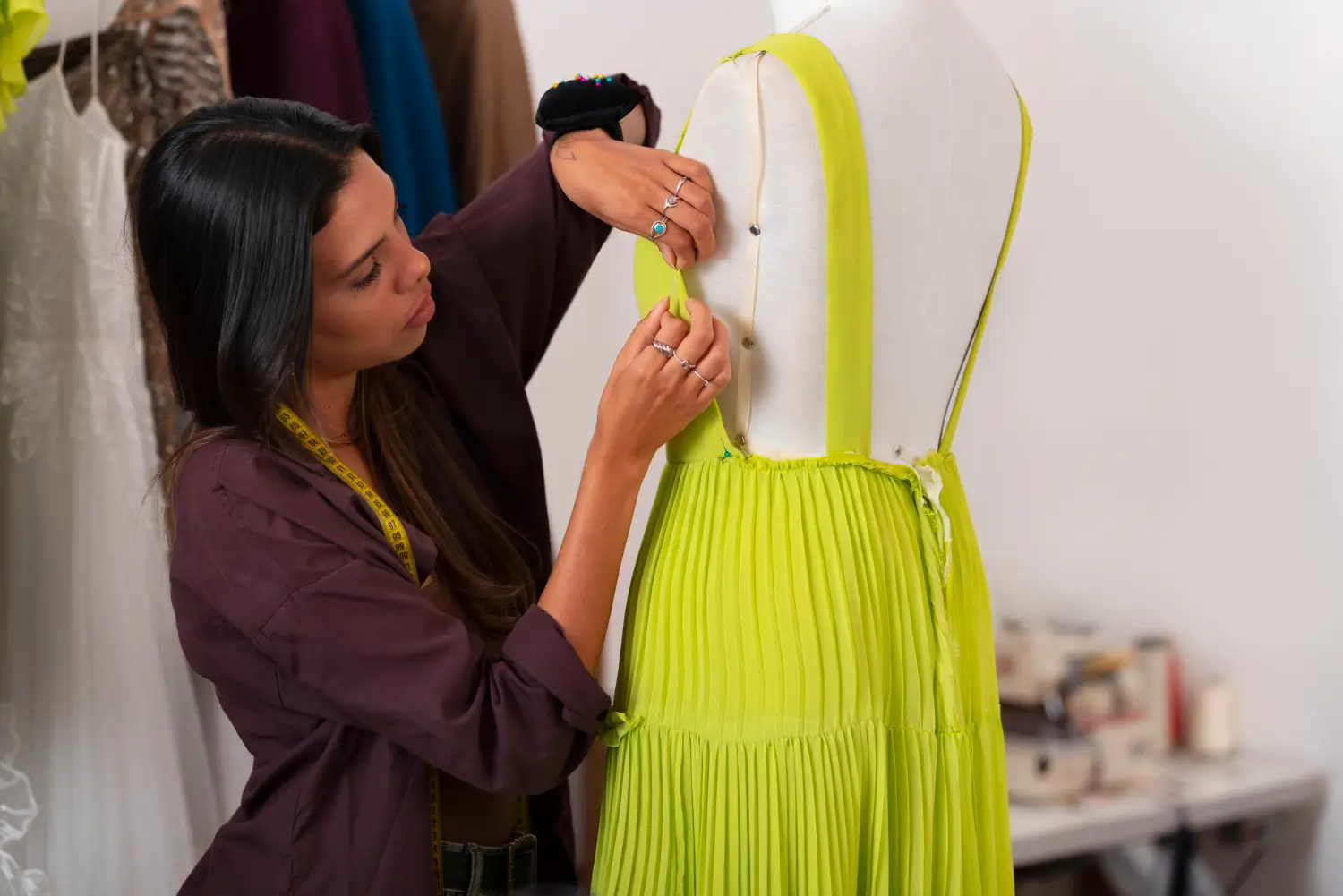
If a dress has ever fit strangely and made you feel like the problem was you, it wasn't. Dress sizes are based on averages, and patterns are made for a standard body that almost nobody actually has. Your torso, waist, shoulders, and hips don't follow any chart. A gap at the back or pulling at the hips just means the pattern and your body don't line up, nothing more.
Online shopping has made this even more common, since dresses now arrive without a fitting room to catch the mismatch first. Alterations solve this problem. Here's how to figure out what's actually wrong with your dress, and what a tailor can do about it.
A Quick Mirror Check Before You Decide
Before you book a fitting or convince yourself the dress is a lost cause, stand in front of a mirror and actually diagnose the problem. How to fix a dress that doesn't fit properly starts with knowing exactly where it's wrong, because “it doesn't fit” covers a dozen different issues with a dozen different fixes.
Work through your body section by section:
- Bust: does the fabric gap away from your chest when you lean forward? Is there pulling or a button strain across the front? Any spillage at the top of the neckline?
- Waist: does the waistline ride up when you sit, or slide down when you walk? Does it pinch at the sides?
- Hips: does the fabric pull tight across the widest part, or pool and bunch below it?
- Length: is the hem level all the way around, or does it dip in the back or ride up in front?
- Straps and shoulders: do the straps dig in, slip off, or leave gaps at the armhole when you move your arms?
What feels like tightness is often a seam in the wrong place, not a size problem. A princess seam sitting an inch off, or a dart positioned too low, can pull and pinch even in a dress that's technically your size. Sizing down or up won't fix a misplaced seam. Repositioning it will.
Reading How the Fabric Moves, Not Just How It Sits
A static mirror check only tells half the story. Raise your arms, sit down, stand back up, and take a few steps. Structured fabrics such as taffeta reveal fit problems right away. Softer fabrics such as chiffon or silk crepe can hide a problem until you move. If a dress gaps or pulls only when you sit or reach, tell your tailor. That's useful information, not something to ignore.
Fixing a Gaping Bust, Neckline, or Back
Bust and neckline gaping is the most common dress complaint tailors see, and it's rarely a size issue. It usually means the dress was cut for a different bust shape or a different back width than yours.
A tailor has several tools for this:
- Taking in the side seams, which reduces overall volume without touching the neckline
- Adding bust darts, which redirect fabric to follow your actual shape instead of gapping around it
- Adjusting the neckline itself, tightening or reshaping where it sits
- Reshaping the back yoke, for dresses that gap between the shoulder blades
Some fixes are quick. A side seam take-in on an unlined dress might need just one fitting and a short turnaround. Others take real work. A structured bodice with boning, lining, or a built-in corset has to be taken apart layer by layer. If your dress falls into that second category, budget extra time and don't expect a same-week fix.
When a Gaping Back Actually Means a Sizing Mismatch
Sometimes back gaping isn't about shape at all. It happens when a dress is sized to fit the bust, leaving the back and shoulders too wide. Here, a tailor doesn't just take in one seam. They taper the entire back panel from shoulder to waist so the dress narrows evenly, not cinched at one point. This is different from a simple dart, so mention it specifically if your bust fits but everything above and behind it feels loose.
Taking In a Too Tight Waist, Hips, or Bodice
The opposite problem is just as common. A dress fits everywhere except one spot, where it pulls, digs in, or won't quite close.
Letting out a dress works by releasing the seam allowance (the extra fabric folded inside every seam). Here's the limit worth knowing before you fall for a dress that's a size too small. Most seam allowances run only half an inch to one inch, adding roughly one to two inches total. If a dress is significantly too tight, letting it out may not be possible, so buying a size up and taking it in is usually the safer bet.
A few dresses are built with extra room on purpose, including hidden side panels or corset style lacing. This is worth asking about if your size tends to shift.
How Bias-Cut and Stretch Fabrics Behave Differently
Not every fabric responds to alterations the same way. Bias-cut dresses, cut diagonally for that fluid drape, stretch and move once handled, making them trickier to take in than a straight grain seam. Stretch fabrics have their own catch. Because the material gives, a dress that feels snug in the dressing room might fit fine once it relaxes with wear. Try sitting and moving around in it before deciding it needs work.
Correcting Uneven Hems and Length Issues
Hemming sounds simple until you look at the range of skill it actually requires. Not all hems are created equal:
- Straight hems: the most straightforward, a clean, level line all the way around.
- Curved hems: such as an A-line or circle skirt, need more precision, since the fabric behaves differently at various points around the curve.
- High low hems: require exact matching on both sides so the shorter and longer sections stay proportional.
- Tiered or pleated skirts: the most complex, since each layer or pleat has to be shortened individually and then rehung so the proportions still look intentional.
One step gets skipped constantly, and it's an easy mistake to avoid: set your hem length while wearing the actual shoes you plan to wear with the dress. A half inch heel difference changes where a hem should sit, and a floor length gown pinned with flats on will end up too short in heels.
Why Hem Weight Changes the Whole Dress
A hem isn't just about length. Heavier fabrics such as satin or velvet need a different finishing technique than lightweight chiffon or georgette, since fabric weight affects how it hangs and how it needs to be secured. A tailor may add slight weight or a different stitch to a lightweight hem so it hangs straight instead of floating or curling. This is worth asking about if your dress is delicate or slippery.
Adjusting Straps, Shoulders, and Armhole Gaping
This category gets overlooked constantly, and it shouldn't, because it often has the biggest impact for the smallest amount of work.
Common fixes include:
- Shortening straps that sit too low or let the bodice sag
- Repositioning straps slightly inward to stop them from slipping off the shoulder
- Taking in gaping armholes, where the fabric pulls away from your arm and shows more than intended
- Adjusting halter or one shoulder designs, which rely entirely on a single point of support and go crooked easily if that point isn't right
Strap adjustments often solve problems that look unrelated at first glance. Loose straps can shift the whole dress and cause pulling at the bust, waist, and back. Get the straps sitting right, and the rest of the dress often falls into place on its own.
One Shoulder and Halter Designs Need a Different Approach
One shoulder and halter dresses balance the whole garment on a single strap or one side of the neckline, so even a small shift in that anchor point throws off the entire silhouette. A tailor working on these styles checks the fit standing, walking, and reaching before making any change, since these designs shift more than a traditional two strap dress.
What to Bring to Your First Alterations Fitting
A little prep makes your first fitting far more useful. Bring:
- The dress, obviously
- The shoes you'll actually wear with it
- The undergarments you'll wear underneath it, since shapewear, a strapless bra, or a different bra style changes the fit noticeably
- Any accessories that affect how the dress drapes or moves, such as a belt, sash, or heavy jewelry that pulls on fabric
During the fitting itself, don't just stand still. Walk across the room, sit down, and reach your arms overhead the way you would at the actual event. A fitting done entirely standing in front of a mirror misses problems that only show up once you move. Anyone searching dress alterations ahead of an event should ask whether the fitting process actually includes this kind of movement.
Timing Your Fitting So You're Not Rushed
Book your first fitting as early as you reasonably can, ideally a few weeks before you need the dress, not a few days. Alterations sometimes take more than one appointment, especially for structured garments or significant changes, and rushing a fitting close to the event date limits what a tailor can safely take on.
Get the Perfect Fit With Dress Alterations at Apple Cleaners
Once you know what's actually causing that gap, pull, or uneven hem, the fix is closer than you think. We handle these exact fit issues every day, and there's no reason to keep wearing a dress that only half works for you.
At Apple Cleaners, our alterations service covers everything from a simple hem to a full bodice reshape, including measurements, custom fittings, resizing, and specialty tailoring. Whether your dress needs a quick side seam take-in or more involved work, we'll walk you through exactly what it requires before we start.
In case you are looking for dress alterations near Belleville, Illinois, bring in your dress or call to book a fitting, and let's get it fitting the way it should.
Apple Cleaners - 1816 N. Belt W, Belleville, IL - 📞 +1 618-507-6502
New York Cleaners - 2200 Bond Ave., East St. Louis, IL - 📞 (618) 268-5268
West Oak Cleaners - 11471 Olive Blvd., St. Louis, MO - 📞 (314) 567-4180
Email: [email protected]